The New Child
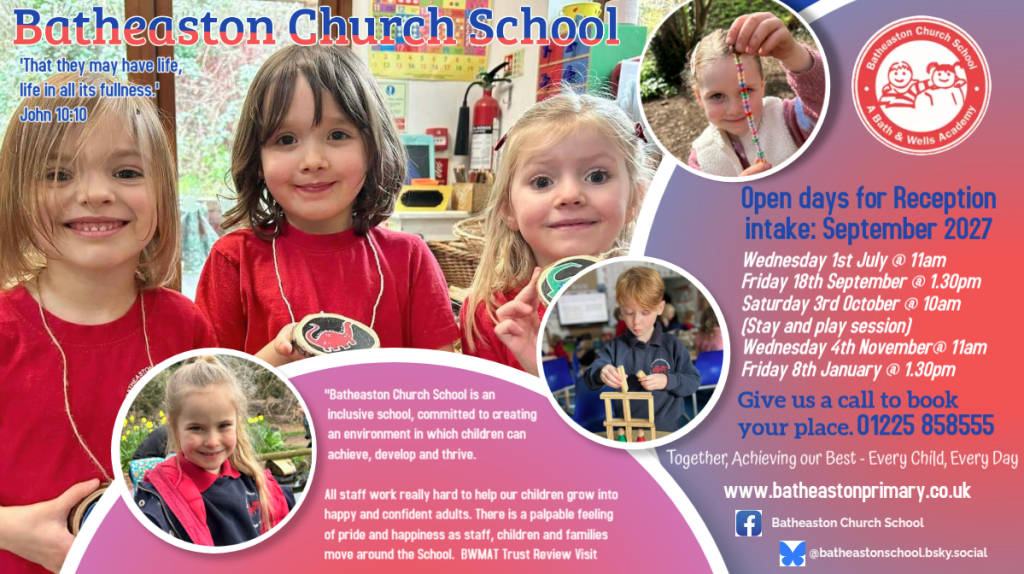
Many of the four-year-old children who come to us will have attended the Jack and Jill Playgroup. This will have provided an excellent facility towards their happy introduction to school. Our Reception Class teacher liaises with the Pre-school group and the Reception teacher visits them to tell stories, sing songs together etc., which also helps to familiarise the children with people from the school. In recent years we have also made links with lots of other nurseries, in order to help children who are about to start with us, to get to know the staff and the school.
Through our commitment to offer all of our “new” children as much opportunity as possible to begin to familiarise themselves with the school, we have evolved an Induction Programme which includes the following opportunities:
1) The Reception Class will be open for parents to have a guided tour of the organisation of the room and the types of activities which are frequently provided.
2) A parents’ workshop explaining our approach to reading and writing is organised and ‘preparation for school’ ideas shared.
3) There are then a number of sessions available when “new” children are able to come with or without parents to join in the existing Reception Class, or to join with the children who will be part of the “new” Reception Class.
Parents will be given a “Starting School” booklet, and the children will be given “Activity Books”, in which they will draw, colour and enjoy activities which provide information about themselves to share with their teacher and class friends as they start school in the September.
Towards the end of term there is a picnic at school for the current reception class and their parents, and for those who will be starting school in September. This offers a chance for the new children to all be together, and for ‘new’ and ‘old’ parents to meet up and chat about starting school etc.
We have evolved an induction programme for the children, which entails a part-time attendance for the first half of term. Parents elect whether to begin by attending the morning sessions or afternoon sessions, and then after 4 weeks, the child then attends the alternative time. Gradually, the children start to attend for lunch as well, and parents are able to accompany them for lunch during the first few times. If parents wish to, it is sometimes arranged for a playgroup place during the morning or afternoon session when they are not in school - but frequently, they find that children involved in the initial period of their schooling are too tired to attend both. For working parents, we could perhaps try to make a lunchtime arrangement with another parent.
We found that the experience for children to begin school as, for example, part of a class of 14 instead of 28, provided wonderful opportunities to establish relationships, and to nurture the security and confidence which comes from knowing exactly where to find all the classroom resources, to understand the routines of the day, and to work closely and intimately with the teacher.
Settling the “new” children into school is seen as a whole school issue and the older children in the school play a large part in this. Each child in the Reception Class is matched with a Class 7 child, as a special friend. This has been enormously successful, and it not only helps the young children to feel safe and that the “big” children are friendly, but it gives the older children an important and positive role in the school community. The older children take care of them and help them eat their lunches; they sit by them in assembly; take them to events such as sports afternoon, and work with them in seasonal performances etc.
We conducted an evaluation of this approach to beginning school on a part-time basis, which involved teachers, parents and the children, and it was found to be enormously successful by all three groups.
This type of small class opportunity would be unlikely to be repeated in the child’s career!
Parents were delighted with the ease with which the children settled so happily, and with the noticeably accelerated progress made, and the children all expressed their enjoyment in coming to school and achieved extremely well from a very early stage.
During the first half of term, parents are provided with a daily written report on the activities in which their children have participated and in this way they were able to talk through the events of the day, which again help to bridge the experience gap between home and school. |